Why Your Waistband Turns on You at 30,000 Feet (and What to Wear Instead)
Quick Answer: Cabin pressure at altitude is equivalent to roughly 6,000-8,000 feet, which lets gas in your digestive tract expand by around 25-30%. Add six hours of hip flexion and a salty meal and the waistband that fit at the gate is genuinely too small mid-flight. Pick a wide, flat, non-elastic-edged waistband and size for hour four, not hour zero.
You dressed comfortably. Soft pants, nothing restrictive, sensible choices all round.
Then somewhere over the Atlantic the waistband becomes the only thing you can think about, and you spend the descent doing that discreet under-the-blanket unbutton everyone pretends not to do.
It is not in your head, and it is not the pants being cheap. Three separate things are happening at once.
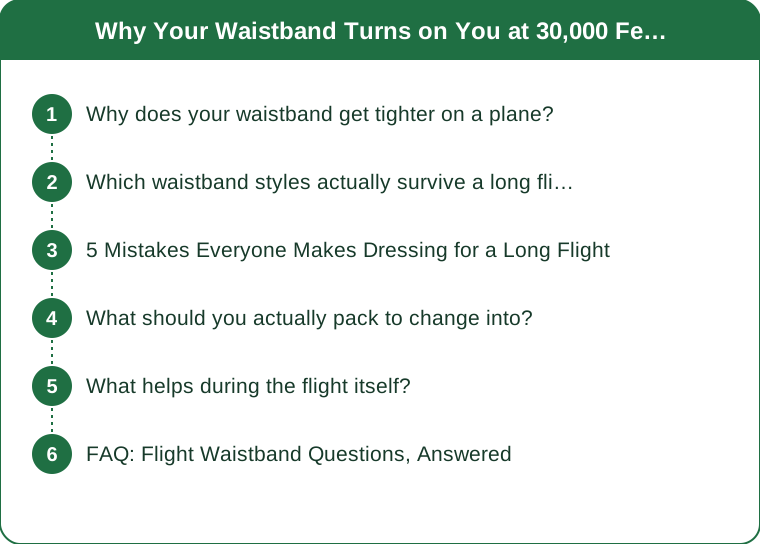
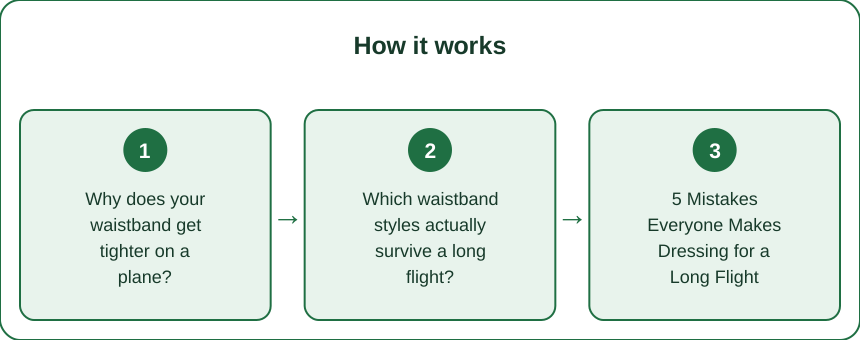
Why does your waistband get tighter on a plane?
Three mechanisms stack, and they compound rather than add:
Pressure. Aircraft cabins are pressurized to the equivalent of roughly 6,000-8,000 feet, not sea level. Gas expands as pressure drops, so the gas already in your digestive tract takes up meaningfully more space at cruising altitude than it did on the ground. This is the effect people underestimate most.
Sitting. Six hours of hip flexion compresses the abdomen and pushes the waistband into the softest available tissue. It also slows digestion, which means more gas stays where it is.
Sodium and fluid. Airport and airline food is reliably high in sodium, and cabin air is extremely dry - typically 10-20% humidity against a normal indoor 40-60%. The dehydration and the sodium together shift fluid distribution in ways that show up around your middle and in your ankles.
Which waistband styles actually survive a long flight?
The ranking, best to worst, is not the one most people assume:
- Wide flat knit waistband (3 inches or more, no separate elastic band). Distributes pressure over the largest area and has the most stretch reserve. The clear winner.
- Drawstring with a soft casing. Adjustable mid-flight without a bathroom trip, which is genuinely useful.
- Fold-over waistband. Good, with one caveat - fold it up rather than down. Folded down it sits at the widest part of your midsection and digs in.
- Narrow elastic band. Concentrates all the pressure into a 1-inch line, which is exactly the mark you find on your skin at baggage claim.
- Rigid button-and-zip. Zero accommodation for a 25% volume change. This is the one that ends up unbuttoned.
Avoid anything with a contrast elastic edge stitched at the top - that edge is a hard line that will not move with you.
5 Mistakes Everyone Makes Dressing for a Long Flight
1. Sizing for the gate. You try the outfit on at home in the morning, standing, unfed. Dress for hour four seated instead.
2. Skipping water to avoid the bathroom. This backfires on every axis - dehydration worsens fluid retention, swelling, and how you feel on landing. Drink, and take the aisle seat.
3. Wearing shapewear or a firm smoothing panel. Compression that is comfortable for a three-hour day is a bad idea across a nine-hour flight where volume is genuinely expanding.
4. Tucking in. A tucked top adds a second layer of fabric exactly where the waistband is already working, and it will not stay tucked after two seated hours anyway.
5. Confusing loose with comfortable. Very loose pants slide and bunch when you shift in a seat, which creates its own pressure points. Soft and structured beats baggy.
What should you actually pack to change into?
If it is a long-haul flight, the single most effective move is bringing a change of waistband in your carry-on - not a full outfit, just softer bottoms.
Changing at the halfway point does two things: it gives your skin a break from a pressure line that has been there for hours, and it resets the psychological experience of the flight entirely.
Also worth the bag space:
- Compression socks for the ankles, which handle the other half of the fluid problem
- A large scarf, which doubles as a blanket and as something to drape over your lap so you can loosen anything discreetly
- A pair of thin socks to change into, for the same reason as the waistband
Skip the belt. If a garment needs a belt to stay up, it is not a flight garment.
What helps during the flight itself?
Small things, done regularly, beat one big intervention:
- Stand every 90 minutes even if only to the galley. Standing releases the hip flexion that is driving half the compression.
- Seated ankle circles and calf raises every hour - they move fluid out of the lower legs, which reduces overall swelling.
- Skip the carbonated drinks. Adding gas to a system that is already expanding is a choice.
- Eat the meal you actually want but drink water alongside it. The sodium is not avoidable on a plane; the dehydration partly is.
- Loosen before you need to. Waiting until it hurts means hours of pressure already applied.
This is general information, not medical advice. Significant leg swelling, calf pain, or shortness of breath during or after a flight is a reason to seek medical attention rather than to adjust your waistband.
FAQ: Flight Waistband Questions, Answered
Does this happen on short flights too?
The pressure effect starts as soon as the cabin altitude changes, so yes - but on a 90-minute flight the sitting and digestion components have not had time to build. Long-haul is where all three stack.
Are leggings the best flight option?
Good ones with a wide flat waistband are excellent. Leggings with a narrow elastic band at the top are among the worst. The waistband construction matters far more than the category.
Why does it feel worse on the return flight?
A few days of different food, more sodium, disrupted sleep and less movement all compound. The return flight starts from a different baseline than the outbound did.
TL;DR:
- Cabin pressure lets digestive gas expand around 25-30% - the tightness is real, not imagined.
- Sitting, sodium, and 10-20% cabin humidity stack on top of that.
- Wide flat knit waistbands win; narrow elastic bands and rigid button-and-zip lose.
- Dress for hour four seated, not for the gate standing.
- Pack a second pair of soft bottoms for long-haul and change at the halfway point.
The flight outfit problem is not about being comfortable at the airport. It is about choosing a waistband that can absorb a genuine volume change over nine hours - and once you pick on that criterion, the discreet unbuttoning stops being part of the trip.
See It in Motion
Seen here: Super High Waist Embossed Yoga Leggings with Inner Pocket — shop it on bubblelime.com
Keep Reading
This article is for general informational and styling purposes only. Fit, sizing, and product availability may vary.