Why Your Waistband Rolls Down on One Side Only
Quick Answer: Even rolling means the band is too loose or the rise is wrong. One-sided rolling means something asymmetrical is pushing it - usually a slight difference between your two hips, a habit of carrying weight or a bag on one side, or a garment that was cut or sewn slightly off. The fix depends entirely on which. Buying a smaller size solves only one of the three, and usually not the one you have.
Both sides rolling is a fit problem.
One side rolling is a clue, and it is worth reading before you replace anything.

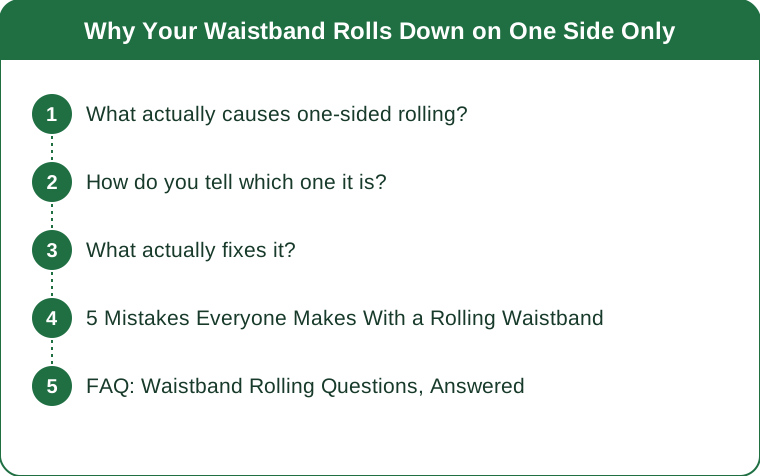
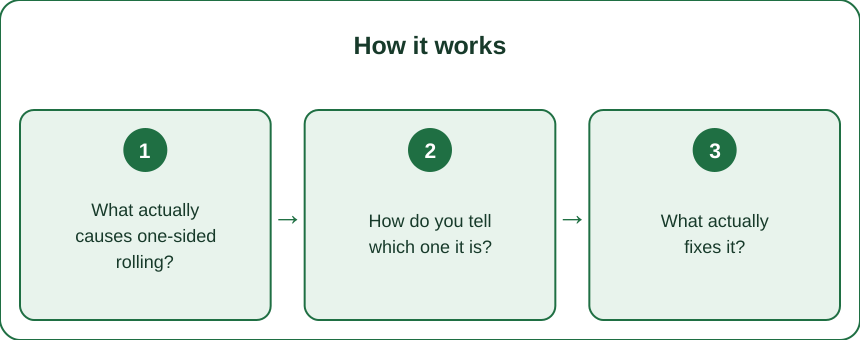
What actually causes one-sided rolling?
Three candidates, and you can tell them apart in about a minute.
Almost everyone is slightly asymmetrical. Small differences in hip height, leg length, and how the pelvis sits are extremely common and mostly unremarkable. A band sitting level on an unlevel foundation ends up bearing more pressure on one side, and pressure is what starts a roll.
Habitual one-sided loading is the biggest contributor. Carrying a bag on the same shoulder, a child on the same hip, or standing with weight on the same leg all produce a consistent tilt. The band rolls where the pressure is, and that pressure is a habit rather than an anatomical feature.
Sometimes it is genuinely the garment. Panels cut slightly off-grain, uneven elastic tension, or a band sewn with a little more stretch on one side all produce a one-sided roll from the first wear. If it rolled from day one on a brand new pair, suspect the garment before yourself.
Wear patterns amplify existing asymmetry. If one side sits under more tension, the fibres there fatigue faster, and the difference grows over the life of the garment. A small original asymmetry becomes a large one after twenty washes.
Movement patterns matter too. If you consistently step up with the same leg, hitch the same hip, or sit with the same leg crossed on top, the band gets worked more on that side. The roll is a record of your habits, which is oddly useful information.
And the seam position can be the whole story. A side seam sitting slightly forward or back on one side changes where the band folds. Check the seams against your hip bones before assuming anything about your body.
How do you tell which one it is?
Four checks, none of which take more than a minute.
Try the leggings on backwards. If the roll moves to the other side, the garment is the problem. If the roll stays on the same side of your body, it is you or your habits. This one test settles it faster than anything else.
Check with a second pair. If two different brands roll on the same side, it is not the manufacturing. Consistency across garments points at loading or anatomy, and that is a different fix.
Look at where the side seams sit. Stand square in front of a mirror and check whether both seams line up with the same landmark on each side. A seam pulled forward on one side indicates the whole garment is rotating rather than the band rolling.
Notice which shoulder your bag lives on. Then try a week on the other side, or a crossbody, and see whether the roll changes. This is the most common cause and the easiest to test, and most people have never considered it.
Check standing habits too. If you always stand with weight on the right leg while brushing your teeth or waiting in line, that is hours a week of consistent tilt. Awareness alone changes it for most people.
And watch whether it rolls at rest or only in movement. Rolling while standing still is fit and pressure; rolling only during squats or lunges is a movement and rise issue. Different problems, different fixes.

What actually fixes it?
Match the fix to the cause rather than defaulting to a smaller size.
If it is the garment, return it. A pair that rolls one-sided from day one is not going to improve, and no amount of adjustment will square it. This is a defect, not a fit issue.
If it is bag or standing habits, alternate sides. A crossbody bag, or simply switching shoulders, removes the consistent tilt within a couple of weeks. The band follows the load - remove the load and the roll usually goes with it.
If it is anatomical, choose a wider band. A wide band distributes pressure over more surface, so an uneven load is less likely to find a fold point. Wide bands are the single most tolerant feature for asymmetrical bodies.
Consider a rise that sits at your natural waist. A band above or below your narrowest point has to grip rather than sit, and gripping is what rolls. Rise matters more than size for rolling, in almost every case.
Avoid sizing down as the reflex response. A tighter band increases pressure at exactly the place already under the most, and it produces digging alongside the rolling. Sizing down usually makes one-sided rolling worse, not better.
And check your leg strength honestly if it rolls during squats. A hip that drops on one side under load pushes the band up on that side. Single-leg work addresses that - and if you notice a persistent side-to-side difference in strength or any pain with it, it is worth having assessed. This is general information, not medical advice.
5 Mistakes Everyone Makes With a Rolling Waistband
Assuming it means the size is wrong. Size explains even rolling well and one-sided rolling badly. The two problems look similar and have almost nothing in common.
Sizing down. More tension at the fold point is the opposite of what a rolling band needs, and it introduces digging as a bonus. This is the most common response and the least effective one.
Never testing the garment. Wearing the leggings backwards for two minutes tells you more than a week of speculation. Nobody does it, and it is the single most informative check available.
Ignoring the bag. A shoulder bag carried on the same side every day for years produces a consistent, measurable tilt. It is genuinely the most common cause and the one people find hardest to believe.
Tumble drying them. Heat degrades elastane recovery unevenly, and a band that has lost recovery in one area rolls there permanently. Cool wash and air dry protects the band more than any other habit.
And the bonus mistake: folding the band down as a permanent solution. It works for an afternoon and trains the fold into the fabric, making the roll permanent. A folded band never unfolds again.
FAQ: Waistband Rolling Questions, Answered
Does a drawcord fix rolling?
Sometimes, but it often creates a bunching point instead and can make the pressure less even, not more. A wide band without a cord generally outperforms a narrow band with one.
Is one-sided rolling a sign of a problem with my hips?
Usually not - mild asymmetry is extremely common and unremarkable. If it comes with pain, a limp, or a clear strength difference, that is worth mentioning to a physio or doctor, but a rolling waistband on its own is not a medical signal.
Will it get worse over the life of the pair?
Generally yes, because the side under more tension fatigues faster. Catching it early and changing the cause is what stops the gradual worsening.
TL;DR:
- Even rolling is a fit problem; one-sided rolling is a clue about the garment, your habits, or your anatomy.
- Wear them backwards for two minutes - if the roll moves, it is the garment, not you.
- A bag carried on the same shoulder is the most common and most fixable cause.
- A wide band and a rise at your natural waist tolerate asymmetry far better than a tight narrow one.
- Never size down and never fold the band - both make the roll permanent.
Put your leggings on backwards tomorrow morning and give it ten minutes. That one test decides whether you need a new pair or a different shoulder.
See It in Motion
Seen here: High Waist Yoga Leggings with Inner Pocket — shop it on bubblelime.com
Keep Reading
This article is for general informational and styling purposes only. Fit, sizing, and product availability may vary.