Why Your Waistband Feels Tighter at 6pm Than at 8am
Quick Answer: Your waist genuinely measures larger in the evening - commonly 2 to 5 cm more than first thing - because of digestive gas and food volume, fluid shifts from sitting, and postural changes as the day goes on. Almost none of it is fat, and it reverses overnight. Deal with it by shopping for clothes in the afternoon, choosing wide, contoured waistbands over narrow elastic, avoiding rigid bands that fit perfectly at 9am, and eating a smaller, earlier dinner on days that matter.
Here is what actually changes across the day and how to dress around it.

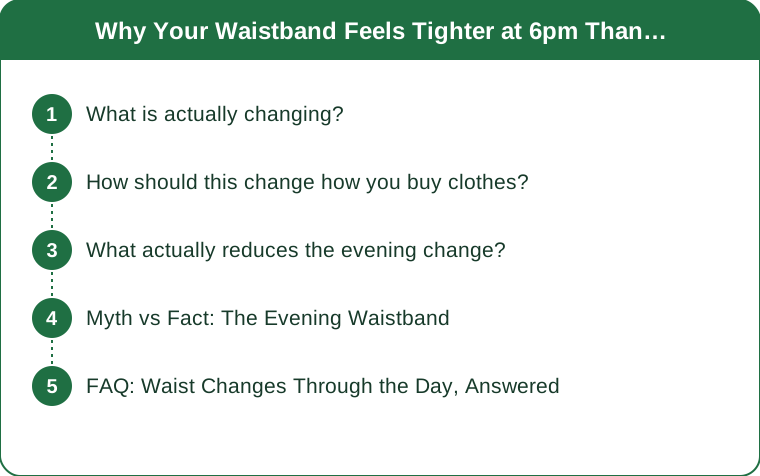
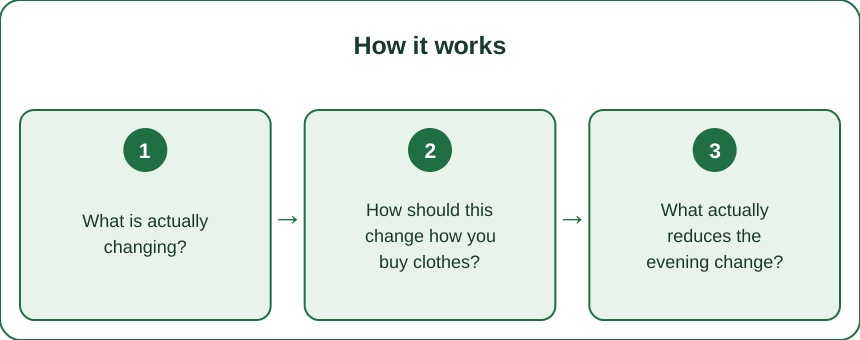
What is actually changing?
Digestive contents are the largest single factor. Across a day you take in food and fluid that occupies real physical space, and gas produced by normal fermentation in the gut adds to it. By evening there is simply more inside your abdomen than there was at 7am.
Fluid redistributes when you sit for hours. Sitting shifts fluid within the body, and a full day at a desk produces measurable changes in the trunk as well as in the legs and ankles.
Sodium intake compounds it. A salty lunch increases fluid retention within hours, which is why the effect varies so much day to day for the same person.
Posture changes as you tire. By evening most people sit and stand with a slightly less engaged core and a more relaxed abdominal wall, which alone changes the measurement.
Menstrual cycle phase adds a further layer. Many people experience noticeably more retention and bloating in the late luteal phase, on top of the daily pattern.
And the total is genuinely substantial. A 2 to 5 cm difference between morning and evening is common and entirely normal - it is the same reason a waistband that fits at breakfast can be uncomfortable by dinner.
How should this change how you buy clothes?
Shop in the afternoon, not first thing. Trying on trousers at 10am fits you to your smallest measurement of the day, which is precisely the mistake that produces a wardrobe of uncomfortable evenings.
Sit down in the fitting room, for a full minute. Sitting adds abdominal circumference immediately, and a band that digs in when seated will dig in for eight hours at work.
Choose wide waistbands over narrow ones. A 4 to 5 cm band distributes pressure across a larger area; a narrow band concentrates it into a line, which is what actually causes discomfort.
Prefer contoured bands to straight ones. A straight horizontal band cannot follow the curve between waist and hip, so it either gaps at the back or digs at the front. A contoured or shaped band follows the body.
Look for knitted or ribbed bands with genuine recovery. They accommodate the daily change without losing shape, whereas a rigid woven band has one size and no tolerance.
Avoid buying at the very edge of a size. If a trouser only just fastens in the morning, it will be uncomfortable every evening of its life. Size for your afternoon measurement.
And check the rise. A band sitting at the natural waist is far more stable than one sitting on the abdomen, where all of the daily change is concentrated.

What actually reduces the evening change?
Move every hour, even briefly. A 2 minute walk each hour substantially reduces the fluid pooling that sitting causes, and it also helps digestive transit.
Eat earlier and slightly smaller in the evening. Finishing dinner about 3 hours before bed reduces overnight digestive load, and the following morning tends to be more comfortable too.
Watch sodium at lunch rather than dinner. Lunch is the meal whose sodium shows up in the same afternoon, and takeaway or packaged lunches are frequently the hidden cause of a bad afternoon.
Eat more slowly and talk less while eating. A lot of digestive gas is simply swallowed air, and slowing down makes a genuine difference for many people.
Stay properly hydrated. Counterintuitively, adequate water reduces retention rather than increasing it, because dehydration prompts the body to hold on to fluid.
Note which foods matter for you specifically. Common triggers vary enormously between individuals, and a two-week note of meals and afternoon comfort identifies personal patterns better than any general list.
And keep one pair of genuinely comfortable trousers for long days. Matching the garment to the day is more effective than any amount of dietary adjustment, and considerably easier.
Myth vs Fact: The Evening Waistband
Myth: Getting tighter through the day means you gained weight. Fact: It is digestive contents, gas, and fluid, all of which reverse overnight. Fat gain does not happen on a ten-hour timescale.
Myth: You should buy clothes at your morning measurement. Fact: That fits you to your smallest size of the day. Shop in the afternoon and you will be comfortable for far more of your life.
Myth: Tighter waistbands hold everything in better. Fact: A tight band concentrates pressure into a line and can be genuinely uncomfortable. A wider, moderately firm band distributes it and feels better all day.
Myth: Bloating always means intolerance. Fact: A degree of daily variation is entirely normal digestion. Persistent, severe, or painful bloating is different and worth discussing with a doctor.
Myth: Drinking less water reduces retention. Fact: The opposite. Dehydration prompts the body to retain fluid, so adequate intake generally helps.
Myth: Elastic waistbands are the lazy option. Fact: They are the engineering answer to a real daily change in measurement. A well-made knitted band on a tailored trouser is a design feature, not a compromise.
FAQ: Waist Changes Through the Day, Answered
How much does your waist change during the day?
Commonly 2 to 5 cm between morning and evening. It comes from digestive contents, gas, fluid shifts, and postural change, and it reverses overnight.
When is the best time to try on clothes?
Afternoon. Morning fittings size you to your smallest measurement of the day, which is how people end up with trousers that are uncomfortable every evening.
What waistband style is most comfortable?
A wide, contoured, knitted band with good recovery. Width spreads pressure, contouring follows the curve between waist and hip, and recovery accommodates the daily change.
Does sitting all day make it worse?
Yes - it contributes to fluid shifts and slows digestive transit. A 2 minute walk each hour makes a noticeable difference.
Is evening bloating a sign of a problem?
Some daily variation is normal digestion. Persistent, severe, or painful bloating, or a change from your usual pattern, is worth discussing with a doctor.
Should I drink less water to reduce bloating?
No. Dehydration prompts fluid retention, so adequate hydration generally reduces rather than increases the effect.
Does the menstrual cycle affect this?
For many people, considerably - especially in the late luteal phase, which layers on top of the normal daily pattern. This is general information, not medical advice.
TL;DR:
- Your waist genuinely grows 2 to 5 cm across the day from digestive contents, gas, fluid, and posture. None of it is fat.
- Shop in the afternoon and sit down in the fitting room for a full minute.
- Wide, contoured, knitted waistbands beat narrow rigid ones - width spreads pressure, contour follows the body.
- Never buy at the edge of a size. A trouser that just fastens at 9am is uncomfortable at 6pm forever.
- Walk 2 minutes every hour, and watch sodium at lunch rather than dinner.
- Adequate water reduces retention - dehydration increases it.
- Keep one genuinely comfortable pair for long days. Matching garment to day beats everything else.
Persistent, severe, or painful bloating is a different matter and worth raising with a doctor. This is general information, not medical advice.
Keep Reading
This article is for general informational and styling purposes only. Fit, sizing, and product availability may vary.